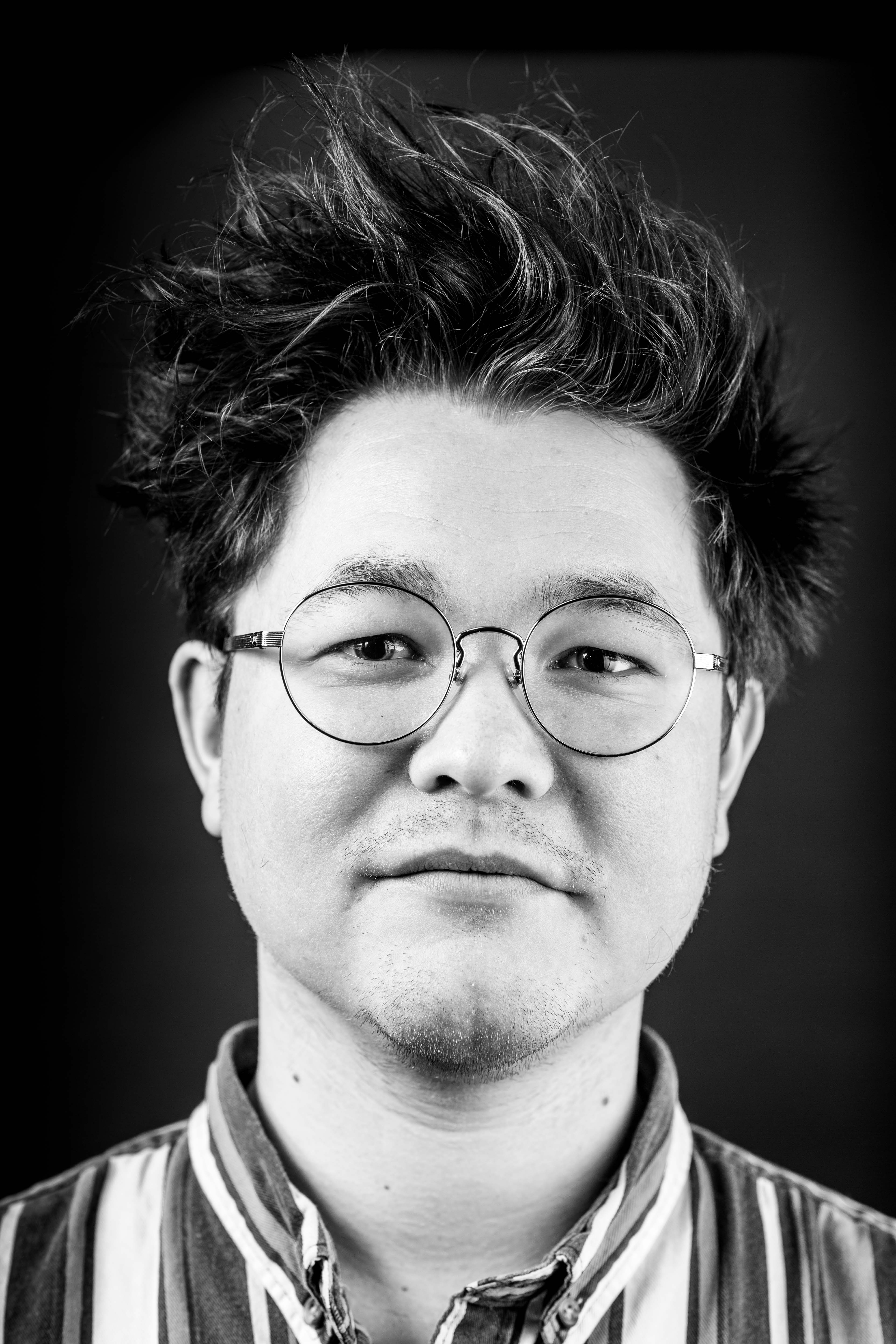
Nikolaj Takata Mücke
Postdoc · Delft University of Technology
I am a postdoc at Delft University of Technology, the Netherlands, working at the intersection of scientific computing and deep learning. My research focuses on generative models, uncertainty quantification, data assimilation, physics-consistent machine learning, and fluid dynamics.
More broadly, I am interested in numerical methods and surrogate modelling for partial differential equations and their applications in computational science and engineering — particularly the development of generative and reduced order models for parameterized PDEs, and applying these to efficient, real-time solving of inverse problems and data assimilation with uncertainty quantification in physics applications.
Publications
Integrating Score-Based Diffusion Models with Machine Learning-Enhanced Localization for Advanced Data Assimilation in Geological Carbon Storage
Physics-Aware Generative Models for Turbulent Fluid Flows Through Energy-Consistent Stochastic Interpolants
Generative Super-Resolution of Turbulent Flows via Stochastic Interpolants
The Deep Latent Space Particle Filter for Real-Time Data Assimilation with Uncertainty Quantification
AI enhanced data assimilation and uncertainty quantification applied to Geological Carbon Storage
Advancing Data Assimilation and Uncertainty Quantification for CO2 Sequestration through AI-Hybrid Methods
Machine Learning-Based Digital Twin for Water Distribution Network Anomaly Detection and Localization
Markov Chain Generative Adversarial Neural Networks for Solving Bayesian Inverse Problems in Physics Applications
Reduced Order Modelling for Dispersive and Nonlinear Water Wave Modelling
Reduced Order Modelling for Wave-Structure Modelling
Reduced order modeling for parameterized time-dependent PDEs using spatially and memory aware deep learning
Reduced Order Modeling for Nonlinear PDE-constrained Optimization using Neural Networks
Experience
Postdoc
I am working as a postdoc in the UrbanAIR project. The goal of the project is to develop a framework for urban air quality and heat dynamics forecasting. My role is specifically focused on the development of data assimilation and uncertainty quantification methods using deep learning techniques.
Postdoc
Together with Benjamin Sanderse, I developed generative models for physics applications. The aim was to perform probabilistic forecasting and posterior sampling that adhere to the underlying laws of physics.
AI Lead
I was the lead developer of the Spatialise AI platform, SOCMO. My role included the development of MLOps pipelines. This covered data science aspects such as model training, testing, and hyperparameter tuning. Furthermore, I was responsible for the ML engineering aspects such as model deployment, monitoring, and scaling.
PhD Candidate
My PhD project dealt with deep learning for data assimilation and inverse problems in physics applications. The aim was to perform real-time data assimilation with uncertainty quantification using deep learning techniques. My supervisors were Cornelis Oosterlee and Sander Bohté.
Research Assistant
The research project dealt with low noise supercontinuum sources for ultra-high resolution 800nm optical coherence tomography for glaucoma diagnosis. I was working on GPU acceleration of a C++ implementation of the 4th order Runge-Kutta Interaction Picture method to solve the generalized nonlinear Schrödinger Equation as well as uncertainty quantification of the input sources.
Student Assistant
My work included programming and mathematical modelling of various elements within the wind energy sector. Examples are time series models for weather with the goal of predicting production time of a wind turbine farm and analyzing buckling capacity of soil supported structures using partial differential equations and optimization techniques.
Science Communicator
Experimentarium is a science museum, mostly for children and young adults. My job consisted of developing and performing science shows and experiments in front of large crowds and make complicated phenomena understandable and comprehensible for the layman and school classes.
Teaching & Supervision
Turbulence Closure Modeling using Stochastic Interpolants
Diffusion Models for Time Series Denoising
Guidance in Using Robotic-Arm Assisted Surgical System for Knee Arthroplasty
Stock Price Simulation under Jump-Diffusion Dynamics: A WGANs-Based Framework with Anomaly Detection Techniques
Hamiltonian Neural Networks for Fluid Flows
Traditional and ML approaches to generate and understand implied volatility surfaces
Data Assimilation for the Geosciences
Computational Imaging masterclass
Neural Networks in Finance
Scientific Computing for Differential Equations 2 (02687)
Advanced Engineering Mathematics 2 (01025)
Scientific Computing for Differential Equations (02685)
Conferences, Workshops & Masterclasses
AIMET-NL meeting: Scientific Machine Learning & Uncertainty Quantification
Co-Organizer: Daan Crommelin
Physics-consistent generative modeling
Co-Organizer: Benjamin Sanderse
Deep Learning-Based Latent-Space Models for Scientific Computing
Co-Organizer: Wouter Edeling
Workshop Digital Twins for Pipe Transport Networks
Co-Organizers: Prerna Pandey, Shashi Jain, Kees W. Oosterlee, Sander M. Bohte
Machine Learning and Stochastic Modelling for Dynamical Systems
Co-Organizer: Wouter Edeling
Workshop on Machine Learning for Physics-Based Modeling
Co-Organizers: Prerna Pandey, Shashi Jain, Kees W. Oosterlee, Sander M. Bohte
AI and IoT for Flow Modeling
Co-Organizers: Shashi Jain, Kees W. Oosterlee, Sander M. Bohte